
Why Transaction Simulation Is Becoming the First Line of Wallet Security
You are about to swap a stablecoin for an asset on another chain. The interface shows a familiar token symbol, the estimated amount looks reasonable, and the transaction fee appears manageable. Then the wallet pauses to simulate what the transaction is actually asking the network to do. That pause matters. In DeFi, the most dangerous transaction is not always the one that fails; it can be the one that succeeds while transferring more authority, assets, or permission than the user intended.
Transaction simulation, wallet security, and cross-chain swaps are often discussed as separate features. In practice, they are parts of one risk-management problem: translating opaque smart-contract instructions into consequences a person can inspect before signing. A wallet cannot eliminate malicious contracts, bridge failures, compromised websites, or user mistakes. It can, however, improve the quality of the decision made at the signing screen. For US-based DeFi users installing a browser wallet such as Rabby, that distinction is more important than a simple “safe” or “unsafe” label.
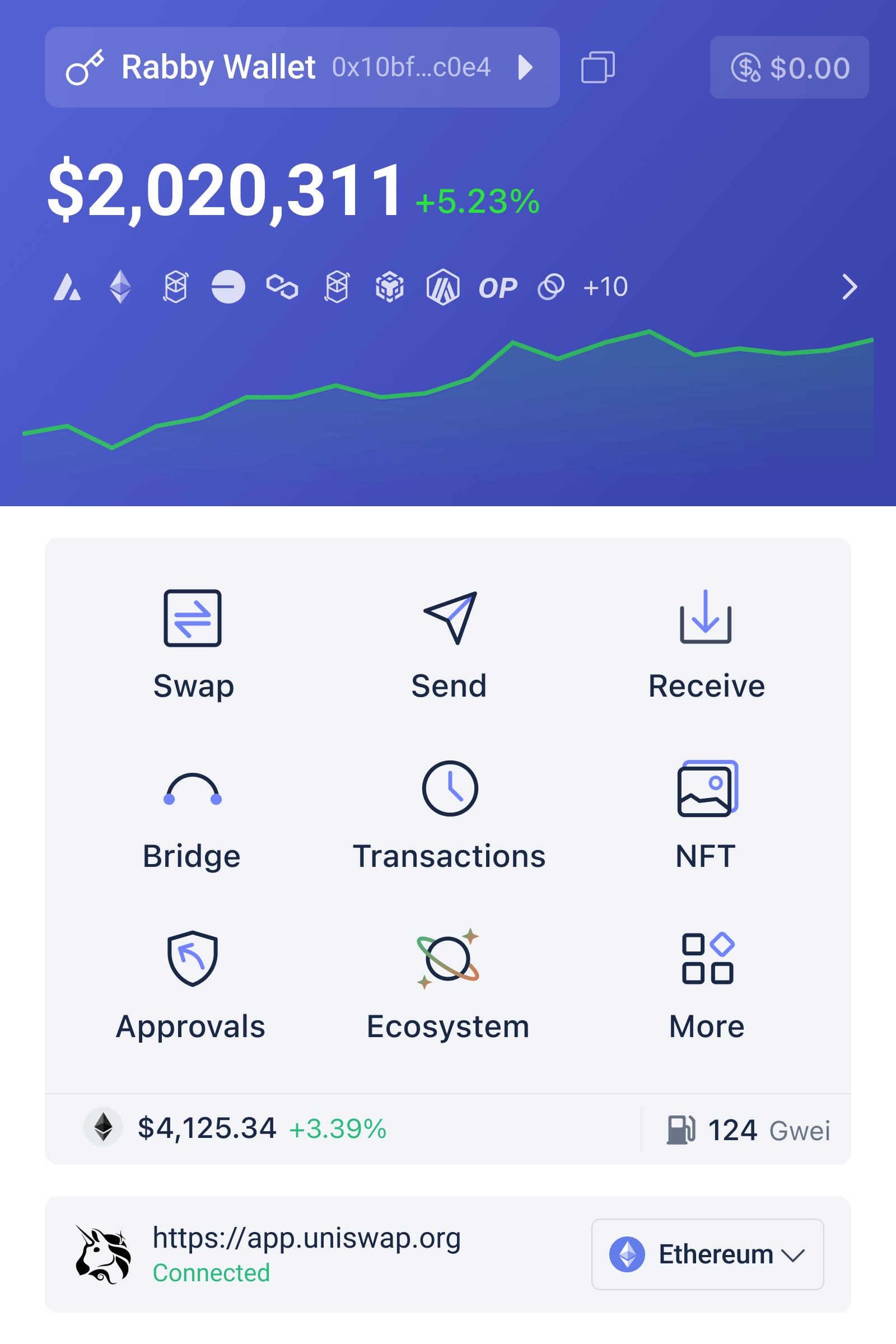
The real security boundary is the signing decision
A blockchain transaction is usually presented through a friendly interface: swap, deposit, mint, stake, or bridge. Underneath, the wallet is asked to sign data that a smart contract will interpret. The contract may move tokens, create an approval, call another contract, or trigger a sequence of actions. The visible button describes the user experience; the transaction data determines the technical outcome.
Simulation attempts to run that proposed transaction against a representation of the current blockchain state before the user signs it. The result can reveal expected token transfers, asset approvals, contract interactions, balance changes, or a likely revert. This is more informative than checking whether the website looks polished or whether the token has a familiar logo. It answers a sharper question: “If this call executes under these conditions, what does it appear to do?”
That wording contains an important limitation. A simulation is an informed preview, not a guarantee. Blockchain state can change between simulation and inclusion in a block. A transaction may depend on timing, an oracle value, liquidity, block ordering, or a contract state that changes moments later. Some contracts also behave differently depending on who calls them or how they are bundled. Simulation improves visibility, but it does not convert an adversarial environment into a deterministic one.
The most useful mental model is therefore not “simulation equals protection.” It is “simulation reduces the amount of blind signing.” That is a meaningful improvement because many wallet attacks exploit a gap between what the user thinks they are authorizing and what the contract is technically allowed to do.
Approvals are permissions, not payments
One of the most persistent DeFi misconceptions is that a token approval is the same thing as a token transfer. It is not. An approval gives a designated spender permission to move a specified amount of a token from the user’s address later, usually through a contract function. The immediate transaction may move nothing at all, while creating a permission that remains relevant after the user leaves the site.
This is why a wallet security review should distinguish at least three outcomes: assets leaving now, permissions being created for later, and contracts being called as part of the route. A swap may require an approval followed by a swap call. A malicious site may request an approval that is far larger than necessary, or direct it to a contract unrelated to the expected protocol. A simulation that makes the permission visible can interrupt the most dangerous kind of autopilot: signing a transaction because the front end says “confirm.”
There is a trade-off here. Restricting approvals to an exact amount can reduce future exposure, but it may require more transactions and additional network fees. Unlimited approvals can make repeated use smoother, yet create a larger blast radius if the approved contract is later exploited or its control changes. Neither choice is universally correct. For a rarely used protocol, a limited approval may be a sensible operational preference; for a trusted, frequently used application, convenience may carry more weight. The key is that the user should recognize the decision as a permission-management choice, not a routine click.
When preparing to rabby extension download, users should treat installation as the beginning of a verification habit, not the end of one. Downloading a wallet from an authentic source, checking the browser extension’s permissions, and confirming the correct network are foundational steps. They do not replace reviewing each transaction, particularly when a website asks for a signature that appears unrelated to the action the user intended.
Cross-chain swaps multiply the places where things can go wrong
A same-chain swap typically involves a user, a decentralized exchange, token contracts, and liquidity pools on one network. A cross-chain swap adds a second execution environment and often an intermediary mechanism: a bridge, messaging system, solver, liquidity provider, or settlement contract. The user may experience one polished flow, but the underlying operation can involve several independent assumptions.
That changes the security question. It is no longer enough to ask whether the swap produces the expected output on the source chain. The user should also ask where the destination asset comes from, which address controls the relevant contracts, whether the destination transaction is guaranteed or merely expected, and what happens if one side completes while the other is delayed. A preview can show source-chain approvals and transfers, but it may not fully communicate every operational risk on the destination chain.
Cross-chain systems also create a distinction between execution risk and settlement risk. Execution risk concerns whether the requested transaction is correctly processed: for example, whether the intended token is deposited into the correct contract. Settlement risk concerns what happens across the broader route: delayed messages, insufficient destination liquidity, a failed relay, changing exchange rates, or a bridge design that depends on a small set of validators or operators. These risks are related, but a successful source transaction does not automatically prove that the user has received the intended economic result.
For this reason, transaction simulation should be treated as one layer in a cross-chain review. It can help verify chain identifiers, contract addresses, token movements, and approvals before signing. It cannot independently establish that a bridge’s economic model is robust, that a destination token is liquid, or that a protocol will recover gracefully from an outage. A clean preview is evidence about the proposed call, not a complete audit of the system behind it.
A practical review framework for DeFi users
A useful review process can be organized around four questions: identity, authority, outcome, and reversibility.
- Identity: Which network, contract, token, and recipient are involved? Familiar branding is not proof that an address is authentic.
- Authority: Am I transferring assets now, granting an approval, or signing a message that could be used later? Who receives or controls that permission?
- Outcome: Does the simulated result match the action I intended, including the asset, amount, destination, and expected fee?
- Reversibility: If something goes wrong, can the approval be revoked, can the transaction be stopped before confirmation, or is the transfer final once mined?
This framework is deliberately simple because security fails under cognitive overload. A user comparing several routes during a volatile US trading session may not parse every function selector or contract bytecode detail. But even a short pause can expose a mismatch: a “bridge” request that grants spending authority to an unfamiliar contract, a destination chain different from the one selected, or an output token whose symbol resembles but does not equal the intended asset.
Wallet warnings are most valuable when they explain the mechanism behind the warning. “Suspicious transaction” is less useful than a clear indication that a contract will receive an approval, that the recipient differs from the displayed application, or that the expected balance change conflicts with the stated action. Users should still exercise judgment: warnings can be incomplete, and benign contracts can look unfamiliar. Conversely, a transaction without a warning is not automatically trustworthy.
What Rabby-style previews can and cannot change
Recent project messaging describes Rabby as a wallet for Ethereum and EVM networks, emphasizing broad chain coverage and on-chain visibility. That positioning is relevant to this discussion because a multi-chain wallet has to solve more than key storage. It must help users maintain context while moving between networks, applications, and contract systems. A consistent review experience can reduce the risk of signing on the wrong chain or misunderstanding a route.
Still, wallet software operates within boundaries. It cannot recover a seed phrase exposed to a fake website, reverse a confirmed transfer, guarantee the honesty of a protocol developer, or settle every disagreement among cross-chain participants. A browser extension also inherits browser-level risks: malicious extensions, phishing pages, copied URLs, and compromised devices remain part of the attack surface. Hardware wallets, separate accounts, withdrawal limits, and careful key management can complement transaction simulation, especially for substantial balances.
The non-obvious point is that better simulation may change user behavior more than it changes smart-contract security. If users begin treating approvals as long-lived permissions and cross-chain operations as multi-stage processes, the security benefit extends beyond any one wallet interface. If they simply click through a more attractive warning screen, the technical improvement is largely wasted. Human attention remains a scarce security resource.
What to watch next
The next stage of wallet security will likely be judged by how well tools explain uncertainty, not by how confidently they label transactions. For cross-chain activity, useful systems would make partial completion, destination-side assumptions, approval duration, and route dependencies easier to understand. Conditional warnings could be more informative than binary risk scores: for example, explaining that a transaction appears consistent with a swap but depends on a contract permission that persists after execution.
That direction is plausible if multi-chain usage continues to expand, but it is not automatic. Better explanations require reliable indexing, accurate contract interpretation, and careful handling of protocols that intentionally use complex call patterns. There is also a risk of warning fatigue. If every advanced DeFi action produces an alarming message, users may learn to ignore all of them. The design challenge is to surface consequential differences without pretending that software can make financial judgment on the user’s behalf.
Frequently asked questions
Does transaction simulation make a DeFi transaction safe?
No. It provides a preview of likely state changes and can reveal suspicious transfers, approvals, or reverts before signing. It cannot guarantee future execution, eliminate smart-contract vulnerabilities, or protect a seed phrase from phishing. Use it as a decision aid within a broader security process.
Why should I care about token approvals during a cross-chain swap?
The source-chain step may authorize a contract to spend tokens, even if the swap itself occurs through several later actions. That permission can create exposure beyond the immediate transaction. Check the spender, amount, and whether the approval is limited or effectively open-ended.
What is the safest habit when using a browser wallet?
Slow down at the signing screen. Confirm the network, recipient, token, amount, approvals, and simulated balance changes. Keep high-value funds separated from experimental activity, and remember that a familiar website or successful previous transaction is not proof that every future request is legitimate.
The practical lesson is modest but powerful: a wallet should not merely hold keys; it should help users inspect consequences. Transaction simulation makes that inspection more concrete, while approval review and cross-chain awareness reveal where the preview stops. Security improves when the user knows both what the tool can see and what it cannot. Before the next swap, that boundary is worth reading as carefully as the transaction itself.